 Post
 Share
 Email
 Copy link
Even the best-laid plans have a way of crashing headlong into reality.
Platinum Equity acquired Italian cruise ship supplier De Wave in November 2019, attracted by its position in a growing industry and opportunities to improve operations.
Months later, the pandemic brought the cruise industry to a standstill, leaving ships stranded, bookings canceled and De Wave’s refurbishment business virtually wiped out.
Earlier this year, Platinum Equity sold De Wave to Italian investment firm Renaissance Partners for approximately €450 million, completing a turnaround that tested the full range of the firm’s operational and financial capabilities.
Through the work of Platinum Equity’s operations team and De Wave leadership, headed by CEO Riccardo Pompili, the firm’s first European Small Cap investment did more than survive.
It thrived.
“Within months, the company was operating near the epicenter of Europe’s initial COVID-19 outbreak while serving an industry brought to a near standstill,” Platinum Equity Co-President Louis Samson said when the sale was announced. “Riccardo and his team showed great leadership and together we rebuilt the business. It’s a remarkable story of achievement, perseverance and teamwork.”
By the time of the sale, De Wave had more than doubled revenue and EBITDA from acquisition levels, reaching record fiscal revenue of more than €400 million and EBITDA of more than €50 million in 2025. Its backlog had grown from approximately €500 million to more than €1 billion.
The turnaround required integrating three businesses, strengthening management, improving financial and operational systems, expanding into higher-margin work and completing a series of acquisitions that broadened De Wave’s capabilities and international reach.
“What began as crisis management evolved into an operational transformation and ultimately a buy-and-build strategy,” Platinum Equity Managing Director and Operations Lead Dan Madden said.
Investment meets crisis
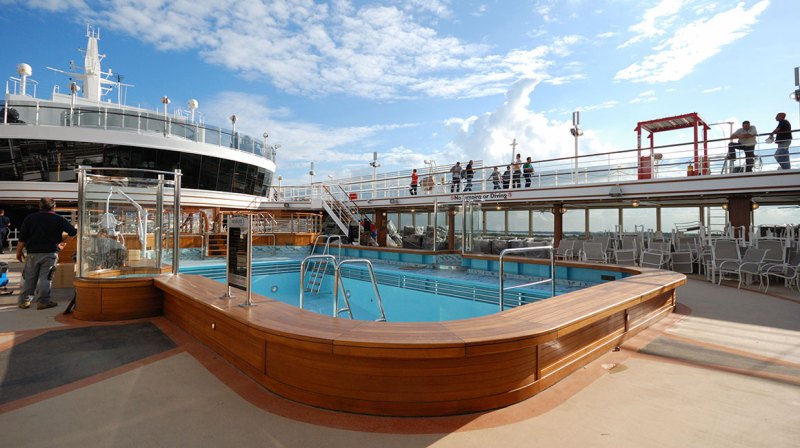
Headquartered in Genoa, De Wave designs, manufactures and installs cruise ship interiors, including cabins, bathrooms, kitchens and public spaces.
At acquisition, De Wave consisted of three businesses — Spencer Contract, De Wave and Precetti — that operated largely independently, with separate management teams and systems. That fragmented structure gave other investors pause.
Platinum Equity’s European Small Cap investment team, led by Managing Director Fernando Goni, saw an opportunity to integrate the businesses.
“You had three businesses led by entrepreneurs, but no unified management structure, operating in a fundamentally misunderstood sector where investors often lump cruise ship construction and refurbishment together with other segments of shipbuilding, although the economics are fundamentally different,” said Filippo Rossi, an Italian national who brings a local’s perspective to the firm’s activities in Italy. “We saw the potential of bringing the businesses together under strong, hands-on leadership to unlock value.”
Cruise ship construction also offered unusually long order backlogs and a relatively small group of established customers. Platinum Equity planned to integrate operations, improve financial controls and expand De Wave’s services.
“What we really liked was the industry,” Goni said. “We had not invested into cruise ships before, but we found a really solid, growing and very resilient industry with a very loyal customer base.
“It’s an industry that is quite well organized, both on the supply side with only really three players in Europe that produce all of the cruise ships and also quite organized on the refitting side because there are not that many operators.”
Plans changed almost immediately.
The cruise industry ground to a halt in early 2020, wiping out demand for De Wave’s higher-margin refurbishment business. Some new ship construction continued, but no one knew how long the shutdown would last.
Pompili, who became De Wave’s CEO shortly before the pandemic, recalled having little time to settle into the job.
“We knew that people were booking cruises, but nobody knew when the ships would restart operations,” Pompili said. “So there was this big question mark.”
Platinum Equity’s immediate concern was whether De Wave could withstand a prolonged collapse in business. It would require an intensive operational response.
“We had to completely shift gears, our playbook immediately changed, we had to dive right in when COVID hit and this company, this industry was one of the ones that was the most affected,” Goni said.
Keeping De Wave afloat
Within 48 hours, Platinum Equity had developed an emergency plan. The firm spoke with Pompili twice daily while reviewing cash balances, supplier obligations and De Wave’s ability to continue operating.
“The No. 1 priority was liquidity. Preserve liquidity at all costs because that was the lifeblood of staying alive,” Madden said.
The team scrutinized purchasing, managed payment schedules and identified ways to free up cash. De Wave also needed relief from its lenders, primarily Italian banks that had helped finance the acquisition only months earlier.
Rossi’s familiarity with the Italian banking market helped.
Lenders agreed to ease loan restrictions through 2021, while Platinum Equity secured additional financing and tapped other opportunities, avoiding the need to invest more equity.
“Having people on the ground that can relate and speak the language and are able to play our hand within the culture was big,” Samson said.
Making changes during the shutdown
Rather than wait for cruise travel to recover, De Wave moved to integrate its three original businesses.
Working with management, Platinum Equity’s operations team improved purchasing, project costing and manufacturing operations in Italy and Poland while introducing systems to strengthen financial reporting and oversight.
The changes addressed problems that predated the pandemic, including systems that made it difficult to track project costs and profitability.
De Wave also recruited technical specialists laid off by cruise operators and invested in manufacturing equipment and facilities, particularly for prefabricated cabins and bathrooms.
The investments came with no certainty about when cruise ships would sail again. But Platinum Equity and De Wave believed demand would return and wanted the company ready to capitalize.
Expanding beyond cruise ship interiors
Platinum Equity also pursued acquisitions to expand De Wave’s role in shipbuilding and refurbishment.
During Platinum Equity’s ownership, De Wave completed nine acquisitions, adding HVAC, electrical systems, glass, refrigeration and other services. The expansion allowed the company to offer more services through a single supplier while reducing its dependence on one major customer.
Pompili described the expanded business as covering everything “from the steel hull to the flowers on the tables.”
The acquisitions, combined with improved purchasing, project costing and a greater focus on higher-margin refurbishment work, positioned De Wave to capitalize on the industry’s recovery.
The financial results reflected the changes.
“It’s one thing to get out of a difficult situation,” Samson said. “It’s another thing to lead the way and not only grow back to where you were but exceed it.”
From near shutdown to successful exit
The recent sale marked the culmination of a transformation that began under extraordinary circumstances and left De Wave a stronger, more diversified business.
Pompili credited Platinum Equity’s support for helping management navigate the pandemic and make difficult decisions.
“I always felt their trust, and that was probably the most important thing,” he said.
For Platinum Equity, the sale capped a six-year transformation that began with a fight for survival and ended with a business worth nearly three times its original purchase price.
“We never considered throwing in the towel,” Samson said. “That’s not in our DNA. We look for solutions. This is a case of, if that’s not the turnaround of the century, it’s on the list.”

 Email Dan
 +1 310.282.9202
 Post
 In
 Email
 Copy link